Eshu
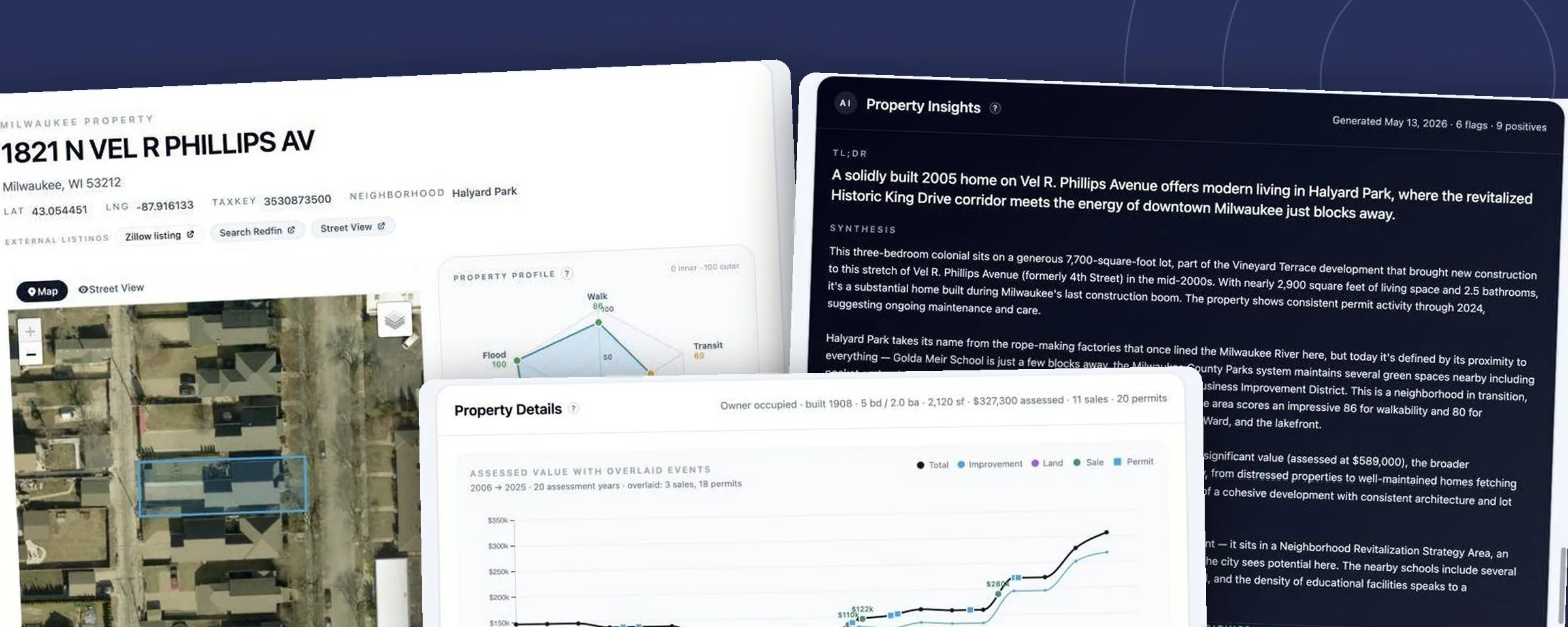
Every house has a paper trail: twenty years of assessments, every sale, every permit, every call to the city about the block. It is all public, and almost nobody reads it. Point Eshu at an address and it reads all of it, from the assessor to the historical society, then tells you the story in plain language: what the house has been through, what the block is like, and what to look at before you fall in love with the kitchen.
What would a house tell you if you could read all of its paperwork?
The records are scattered across eleven offices and websites, each with its own format and its own jargon. Read together, they turn into something you can use: how the place has changed, how long people stay, what the city knows that the listing doesn't say.
Eshu pulls from eleven public sources: the assessor, permits, sales, crime, 311 calls, how long neighbors stay, the census, flood maps, walkability, court records and the historical society. Each one gets its own panel and a one-line summary in plain language, and every claim links back to where it came from.
Then it writes the buyer’s read: the one-liner, the longer version, what looks good, and what to check. The twenty-year chart drops every sale and permit onto the value line, so a house’s history reads like a story instead of a spreadsheet.
Role: The idea, the design, the code. All of it.
How it came together.
Every place has a story. The data is how you find it.
Eshu takes eleven public records and hundreds of numbers and turns them into something you can read at the kitchen table: what the house has been through, how the block has changed, who stays and who moves on, what living there might feel like. The analysis does the work so the story can do the talking.
It is the same thing we do in every room we build. People never see the machinery. They see what it means to them.